Closed-Loop Supply Chain Packaging
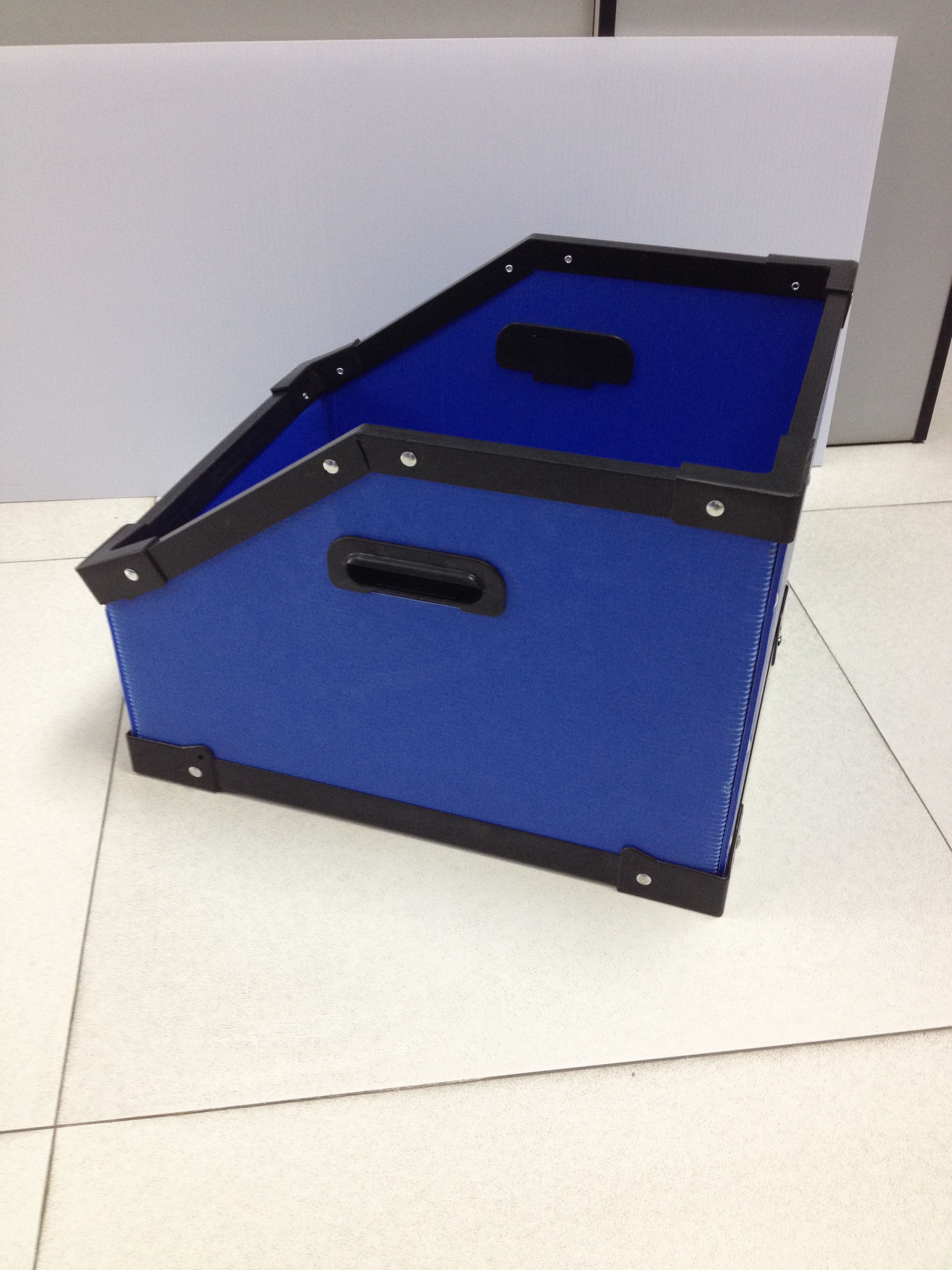
PP containers built for closed-loop supply chains. 50+ trips per box, RFID-compatible, custom dimensions, and a documented break-even vs. cardboard within 12-18 months. Engineered for continuous flow operations, not single-use waste.
Core Capabilities
Three engineering decisions that define Elipacko reusable shipping boxes as an asset, not a consumable.
Integrated label wells and moulded pockets accept standard HF or UHF RFID transponders without protrusion or risk of tag loss. Full fleet tracking becomes straightforward: every box scanned in, scanned out, washed-and-returned confirmed. Operations running WMS integration can automate location data, utilisation rates, and loss reporting from day one.
Unlike corrugated box sizing constrained by flute pitch and die tooling, injection-moulded PP boxes can be specified to the millimetre - matching your conveyor widths, racking depths, cold-store shelving, or truck load profiles. Standard euro-pallet and imperial-pallet subdivisions are available for fast deployment; custom tooling is available for volume commitments.
The maths are straightforward once you account for the full cardboard cost: not just the box price, but inbound freight for empties, storage of flat-packs, assembly labour, break-down and baling labour, disposal or recycling fees, and the cost of quality failures from box collapse. Against that full figure, a PP box fleet with 50+ trips typically breaks even in one to one-and-a-half years.
The term "reusable shipping box" sounds like a sustainability initiative - something you do to hit an ESG target and report in the annual review. In reality, for any operation running a closed or semi-closed supply chain, it is first and foremost a financial decision. The sustainability benefits are real and significant, but they follow from the economics, not the other way around.
A closed-loop packaging system works like this: boxes leave your facility with product, arrive at a customer or distribution node, are emptied, collected, returned - or depot-swapped - washed, and reissued. Every trip the same box makes is a cardboard box you did not buy, did not assemble, did not break down, and did not pay to dispose of. Multiply that across a fleet of thousands of boxes making dozens of trips per year, and the savings become material at any significant shipment volume.
PP (polypropylene) is the dominant material for reusable shipping containers for reasons that are structural, chemical, and economic all at once:
Manufacturers sometimes quote trip counts that are theoretical rather than field-validated. The 50+ trip minimum for Elipacko reusable boxes is based on operational data from existing fleet deployments, not just accelerated lab testing. In practice, many boxes exceed 80-100 trips before reaching retirement criteria - typically a structural defect that fails visual inspection rather than gradual performance degradation that might compromise cargo security.
Trip count is sensitive to handling conditions. A box used in a grocery retail closed loop - clean environments, conveyor handling, dock levellers - will outlast the same box in a heavy industrial return loop where it is occasionally dropped from a loading dock. Elipacko's team can help you assess the right construction specification for your specific handling environment and calculate a realistic trip projection.
Fleet visibility is the perennial challenge with reusable packaging programmes. Without it, boxes migrate to non-return nodes, accumulate at certain customers, or simply disappear from the fleet. RFID changes the economics of tracking fundamentally: instead of manual counts and reconciliation spreadsheets, every scan point in your network - goods-in, goods-out, wash tunnel entry, loading dock - generates an automatic location event tied to a unique box identifier.
Elipacko boxes are designed with RFID in mind from the tooling stage. Tag pockets are located in low-impact zones to protect transponder integrity through repeated handling cycles, and the PP body provides near-ideal RF transparency for common UHF (860-960 MHz) and HF (13.56 MHz) protocols. Integration with SAP, Oracle, and common WMS platforms is via standard EPC data formats. Operations teams have reported reducing annual box losses from 15-25% of fleet size down to under 3% after systematic RFID implementation.
Closure design is where one-size-fits-all thinking fails reusable packaging programmes. The right closure depends entirely on your operational flow. Elipacko offers three primary configurations:
Stacking lugs are engineered to work correctly with all lid configurations, ensuring that sealed or open boxes stack to the same column height for consistent and predictable pallet construction throughout the warehouse.
In shared-network reusable systems - where the same box design serves multiple product flows or customer tiers - colour coding is the operational control that prevents cross-contamination, misrouting, and costly customer disputes. Standard Elipacko reusable shipping boxes are available in eight stock colours for immediate deployment. Custom colour compounding is available at volume MOQs. Embossed or printed company branding, customer logos, return address panels, and care handling instructions are all achievable either at the moulding stage or post-mould.
Extended Producer Responsibility (EPR) legislation is tightening across the EU and UK, materially increasing the cost of single-use packaging for large shippers. In the United States, state-level packaging EPR laws are expanding rapidly. Transitioning shipment volume to reusable packaging directly reduces EPR liability and positions your operation ahead of compliance deadlines - rather than scrambling to retrofit your packaging programme under regulatory pressure.
A lifecycle carbon assessment comparing reusable PP boxes against corrugated single-use equivalents consistently shows a 70-80% reduction in CO2e per transit unit over a five-year analysis period, even accounting for wash energy consumption and return logistics emissions. This is increasingly material to Scope 3 emissions reporting requirements under CSRD in the EU and equivalent voluntary and mandatory disclosure frameworks in other markets.
For procurement teams navigating supplier sustainability scorecards, a documented shift to closed-loop reusable packaging is one of the highest-impact line items available in the packaging and logistics category - combining genuine cost reduction with measurable environmental benefit and regulatory risk mitigation in a single capital investment.
Side by Side
Measured across the full criteria set that determines true supply-chain packaging cost and risk.
| Criterion | Reusable PP Box (Elipacko) | Corrugated RSC Box | Single-Use Plastic Mailer |
|---|---|---|---|
| Trips per unit | ✔ 50-100+ | ✖ 1-2 | ✖ 1 |
| RFID tracking | ✔ Integrated pockets | ✖ Label only | ✖ Not practical |
| Washable / sanitisable | ✔ Wash tunnel rated | ✖ Not washable | ✖ Not washable |
| Custom dimensions | ✔ Exact to spec | △ Die-cutting constraints | △ Limited range |
| Moisture resistance | ✔ Fully waterproof | ✖ Collapses when wet | ✔ Good |
| Rigid stacking | ✔ Column-load rated | △ Degrades wet or heavy | ✖ No stacking |
| 5-year cost per transit | ✔ Lowest | ✖ Highest | ✖ High |
| EPR / sustainability | ✔ Reduces EPR liability | △ Recyclable but high volume | ✖ Increasing regulatory risk |
Elipacko's team can model the ROI for your specific shipment volumes and supply-chain structure. Custom dimensions, RFID specs, and bulk pricing available on request.
Talk to Elipacko About Reusable Boxes